First-Aid Box for Indian Homes (Simple, Safe List)
Basic First-Aid Box for Indian Homes
Minor injuries are common at home—cuts while chopping, small burns, sprains, fever at night. A well-stocked first-aid box means you can act quickly while you arrange medical help. This guide gives you a practical, India-ready checklist (only safe, over-the-counter items), storage tips, and simple scripts for emergencies. For life-threatening issues, call the single pan-India emergency number 112 or your state ambulance (often 108). 112 India
Disclaimer (health): This guide is general information—not medical advice. For diagnosis, prescription medicines, allergies, or chronic conditions, talk to a qualified doctor. Check official portals for current first-aid guidance. National Disaster Management Authority+1
🧭 Summary
-
Outcome: A safe, organised home first-aid box with essentials for cuts, small burns, fevers, sprains, and basic eye/skin cleaning.
-
Timelines: Buy and set up in 1–2 hours; review every 6 months for expired/used items.
-
Costs: ₹800–₹2,000 depending on quality and quantities (box, thermometer, ORS, bandages, etc.).
-
Docs & notes: Keep emergency contacts, allergy list, and regular medicines list inside the lid.
-
Top pitfall: Adding prescription drugs or strong antibiotics “just in case.” Avoid that; stick to OTC items and call 112/seek medical advice for anything serious. National Disaster Management Authority
🧰 Before you start
Who this is for: Indian households (families with kids/seniors, tenants, flatmates). Keep one main box at home and a mini kit in the car/scooter top box.
Where to keep it: Cool, dry, easy-to-reach shelf—not above the gas stove/bathroom geyser. Keep locked or out of reach of children. National Disaster Management Authority
What you’ll need (shopping list—see full checklist below):
-
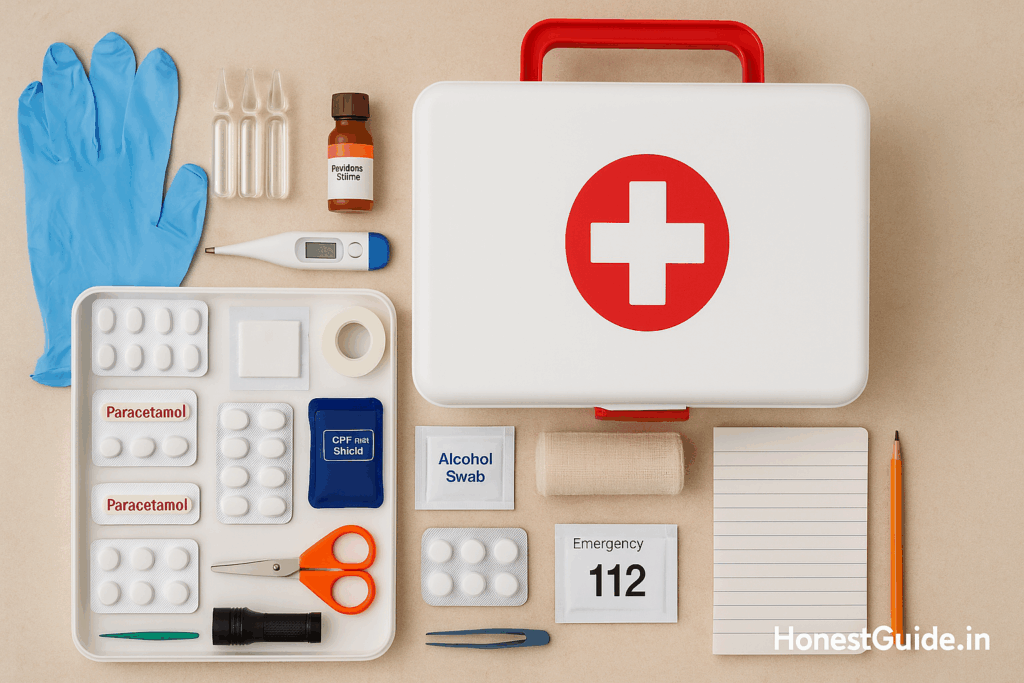
Box/Bag: Rigid plastic box with latch or soft zip pouch (transparent dividers help).
-
Cleaning: Sterile saline vials (10–20 ml), alcohol swabs, hand sanitiser.
-
Dressings: Adhesive strip bandages, sterile gauze pads, crepe bandage (7.5–10 cm), micropore tape, triangular bandage, cotton roll.
-
Ointments/lotions: Povidone-iodine or chlorhexidine solution for skin (for minor cuts), simple burn gel or aloe gel for small burns.
-
OTC medicines:
-
Paracetamol (adults & paediatric strengths—note doses).
-
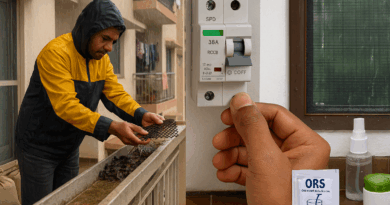
ORS sachets (WHO formula).
-
Antacid (chewable/tablet).
-
Antihistamine (e.g., cetirizine) for mild allergy/itch.
-
ORS > painkillers: For vomiting/loose motions, start ORS and call a doctor if red flags appear (see FAQs).
-
-
Tools: Digital thermometer, blunt-tip scissors, tweezers, safety pins, instant cold pack or gel pack (freezer), CPR face shield, 2 pairs nitrile gloves, small torch with spare cells, notepad & pencil.
-
Add-ons by household: Oral dosing syringe/spoon for kids, spare spectacles prescription copy, sanitary pads, extra batteries, small whistle/torch (useful in outages). NDMA and MoHFW encourage preparedness (first aid, emergency bag, reliable info). National Centre for Disease Control+1
Emergency numbers sheet (print/handwrite and tape inside lid):
-
112 (pan-India emergency: Police/Fire/Health).
-
Local ambulance (state helpline if different), nearest 24×7 casualty (hospital), family doctor, two emergency contacts. 112 India
🔟 Steps (do this now)
-
Pick a proper container. Choose a sturdy, closable box/pouch; add zip-bags to separate wound care, fever, allergy, sprain. Label each bag.
-
Wash hands + gloves. Before handling any wound item, sanitise hands and wear nitrile gloves to reduce infection risk. Dispose used items safely.
-
Stock wound cleaning first. Place sterile saline vials and alcohol swabs up front. For minor cuts/abrasions, saline rinse → pat dry → apply antiseptic (povidone-iodine or chlorhexidine) → cover. (Use clean water if saline unavailable.) NDMA emphasises safe airway/breathing/bleeding basics; cleaning early helps. National Disaster Management Authority
-
Add dressings logically. Keep adhesive strips for small cuts; sterile gauze + micropore tape for larger ones; crepe bandage for sprains; triangular bandage for slings. (See quantities in checklist.) Indian first-aid references list these as kit staples. St John Council
-
Include a simple burn setup. For minor first-degree burns: cool running water 10–20 minutes, then a simple burn gel/aloe; do not apply toothpaste/ghee. Cover loosely with sterile gauze. Seek care for bigger/deeper burns or face/genitals. (General first-aid principles per national resources.) National Disaster Management Authority
-
Build your fever corner. Add digital thermometer, paracetamol (adult & paediatric), and note child doses on a sticky (from your paediatrician). If fever with severe symptoms (stiff neck, breathing difficulty, rash, drowsiness), seek urgent care.
-
Hydration & stomach upsets. Keep ORS (3–6 sachets). Start sips after vomiting stops. If blood in stool, persistent vomiting, or signs of dehydration (very dry mouth, no urine), seek medical care. NDMA/MoHFW emphasise knowing red flags and accessing help early. National Centre for Disease Control
-
Allergy basics. Keep cetirizine tablets for mild itching/rhinitis. For breathing difficulty, throat swelling, dizziness, call 112 immediately—this is an emergency. 112 India
-
Add tools you’ll actually use. Tweezers (splinters), blunt scissors, safety pins, torch, CPR face shield. If trained in CPR, place a simple CPR steps card with your kit. (Training programmes are promoted with AIIMS/AHA initiatives.) www.heart.org
-
Finish with paperwork & rotation. Tape emergency sheet inside lid; add allergy/med list and doctor’s numbers. Set a phone reminder to check every 6 months for expiry/used items; replace immediately after use.
📋 Checklist (copy-paste)
| Item | Qty (home) | Notes |
|---|---|---|
| Rigid/zip first-aid box with dividers | 1 | Label sections |
| Nitrile gloves | 4–6 gloves | 2–3 pairs |
| Hand sanitiser (small) | 1 | Near the top |
| Sterile saline vials (10–20 ml) | 6–10 | For wound/eye rinse |
| Alcohol swabs | 10–20 | For skin cleaning (not deep wounds) |
| Povidone-iodine or chlorhexidine | 1 small bottle | For minor cuts |
| Adhesive strip bandages (assorted) | 15–20 | Waterproof mix helpful |
| Sterile gauze pads (7.5×7.5 cm) | 10–12 | Individually packed |
| Micropore tape (2.5 cm) | 1 roll | Skin-friendly |
| Crepe bandage (7.5–10 cm) | 2 | Sprains/support |
| Triangular bandage | 1–2 | Sling/multi-use |
| Cotton roll | 1 | Do not use directly in wounds |
| Burn gel/aloe gel | 1 | For minor first-degree burns |
| Digital thermometer | 1 | Spare battery if needed |
| Paracetamol (adult) | 1 strip | As per pack |
| Paracetamol (paediatric) | 1 bottle/strip | Dose per paediatrician |
| Antacid tablets | 1 strip | For acidity |
| Cetirizine | 1 strip | Mild allergy/itch |
| ORS sachets | 3–6 | WHO formula |
| Tweezers (pointed) | 1 | Splinters/ticks |
| Scissors (blunt tip) | 1 | Cutting tape/bandage |
| Safety pins | 4–6 | For bandages |
| Instant ice pack or gel pack | 1 | For sprains (RICE) |
| CPR face shield | 1 | For trained users |
| Torch + spare cells | 1 | Power cuts/emergencies |
| Notepad + pencil | 1 | Record time, vitals, meds |
| Emergency contacts sheet | 1 | 112, ambulance, hospital, doctor |
For disaster readiness (floods/landslides/earthquakes), NDMA also recommends a broader emergency kit with water, food, light, and radio. Keep that separate from the medical box. National Disaster Management Authority
⚠️ Red flags & common mistakes
| Mistake | Consequence | Fix |
|---|---|---|
| Keeping prescription antibiotics/strong painkillers in the kit | Wrong/unsafe use; masks serious illness | Keep only OTC basics; see a doctor for infections/severe pain |
| Using toothpaste/ghee on burns | Infection, delayed healing | Cool water 10–20 min → cover with sterile gauze; seek care if large/deep |
| Piling cotton directly into wounds | Fibres stick; higher infection risk | Rinse with saline/water; use sterile gauze |
| No child-safe storage | Accidental ingestion | Lock the box/keep out of reach; add child-proof caps |
| Missing emergency numbers | Delay in help | Tape 112/ambulance and hospital contacts inside lid |
| No expiry check | Ineffective/unsafe items | Calendar reminder every 6 months; replace used/expired |
| Ignoring red-flag symptoms (severe bleeding, breathing difficulty, altered consciousness) | Life-threatening delay | Call 112 immediately; start basic first aid/CPR if trained 112 India+1 |
🗣️ Templates & scripts
Phone script (calling 112):
“Hello, emergency. My name is [Name]. I am at [Full address/landmark, city]. We have [issue: heavy bleeding / severe burn / unconscious person / breathing problem]. The person is [age/sex] and [conscious/unconscious, breathing/not breathing]. I have started [first aid/CPR if trained]. Please send [ambulance/police/fire]. My phone number is [number].” 112 India
Home note (inside lid):
-
Allergies: [e.g., Penicillin, peanuts]
-
Regular meds: [e.g., BP tablet 8:00, insulin 20:00]
-
Doctor: [Name, clinic, hours]
-
Hospital casualty: [Name, 24×7]
-
Emergency contacts: [Name + number]
WhatsApp text to family group (after an incident):
“All okay now. Used first-aid for [cut/burn/sprain] at [time]. Gave [medicine name & dose]. Next check at [time]. Will visit [clinic/hospital] if symptoms worsen.”
🧗 Escalation path (with links)
-
Immediate danger or red-flag symptoms → Call 112 (integrated emergency line). Use the 112 India app if available. 112 India
-
Non-emergency but needs care → Visit nearest casualty/ER or your family physician the same day.
-
Disaster/large-scale event → Follow official updates and first-aid guidance from NDMA/State DMAs/MoHFW websites and advisories. National Disaster Management Authority+1
-
Skill-building → Attend a basic first-aid/CPR session through recognised programmes (AIIMS collaborations, Indian Red Cross, St John). Keep a CPR steps card in your kit. www.heart.org+2ircsstoragedev.blob.core.windows.net+2
❓ FAQs
1) Can I keep ibuprofen/diclofenac or antibiotics “just in case”?
Avoid stocking prescription medicines and stronger painkillers in a general home kit; misuse can mask serious problems or cause side-effects. Use paracetamol for fever/pain unless your doctor advises otherwise. Seek medical advice for persistent/severe symptoms.
2) What about antiseptic powders and coloured liquids?
Use povidone-iodine or chlorhexidine solutions sparingly on minor cuts. Avoid products that can irritate tissue. Rinse first with saline/clean water, then cover. National Disaster Management Authority
3) How do I handle nosebleeds?
Sit up, lean forward, pinch soft part of nose for 10 minutes, spit out blood (don’t swallow). If heavy or recurring, seek care. (General first-aid principles per national resources.) National Disaster Management Authority
4) Which thermometer is best?
A digital oral/axillary thermometer is simple and safe. Keep a spare battery. Clean with alcohol swab after use.
5) How much ORS should I give?
Adults: frequent small sips; children: follow paediatric advice/dosing. Start slowly after vomiting subsides. If signs of dehydration or blood in stool, seek medical help. National Centre for Disease Control
6) What should be different for kids and seniors?
For kids, stock paediatric paracetamol and a dosing syringe; for seniors, add reading glasses, a list of regular medicines, and monitor fall risks at home. Keep everything child-safe and clearly labelled.
7) Should I buy a ready-made kit?
You can; verify it has the essentials in this checklist. Many commercial kits include useful basics (bandages, gauze, tape, triangular bandage), but you’ll still add ORS, thermometer, meds, and your emergency sheet. St John Council
8) Is CPR safe to attempt at home?
If you’re trained, yes—follow your training and consider a face shield. Hands-only CPR is widely taught through Indian programmes with AIIMS partners. If untrained, call 112; the dispatcher may guide you. www.heart.org
9) How often should I refresh the box?
Every 6 months: check expiry, replace used items, test the torch, update contacts. Also restock right after any use.
10) Can I include a blood pressure monitor or glucometer?
Those are health devices, not first-aid, but many families keep them nearby. If you do, store separately and maintain logs as advised by your doctor.
📚 Sources
-
Emergency Response Support System (ERSS) – 112 India (Govt of India) — single emergency number and app features. 112 India
-
National Disaster Management Authority (NDMA) – First Aid & Preparedness — public guidance on first-aid basics and building kits for emergencies. National Disaster Management Authority+1
-
Ministry of Health & Family Welfare (MoHFW) / NCDC – Emergency Preparedness Checklist — learn basic first aid & CPR, plan for injuries/outages. National Centre for Disease Control
-
Indian Red Cross Society – First Aid Manual — structured first-aid principles for lay responders (general reference). ircsstoragedev.blob.core.windows.net
-
AIIMS & AHA – Hands-Only CPR initiative — community CPR training in India. www.heart.org
-
St John (India) – First Aid Kit contents — typical contents list for household kits (for comparison while shopping). St John Council